This blog is designed to create community for believers and provide support for seekers. I encourage all readers to share their faith in an effort to lift and encourage one another.
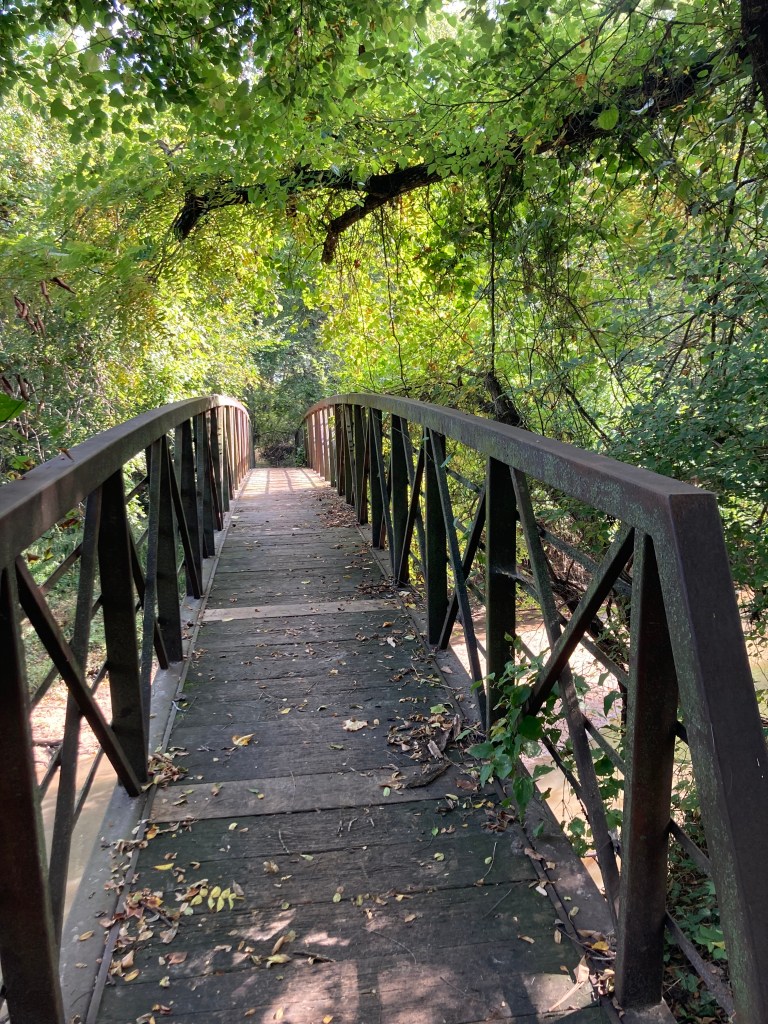
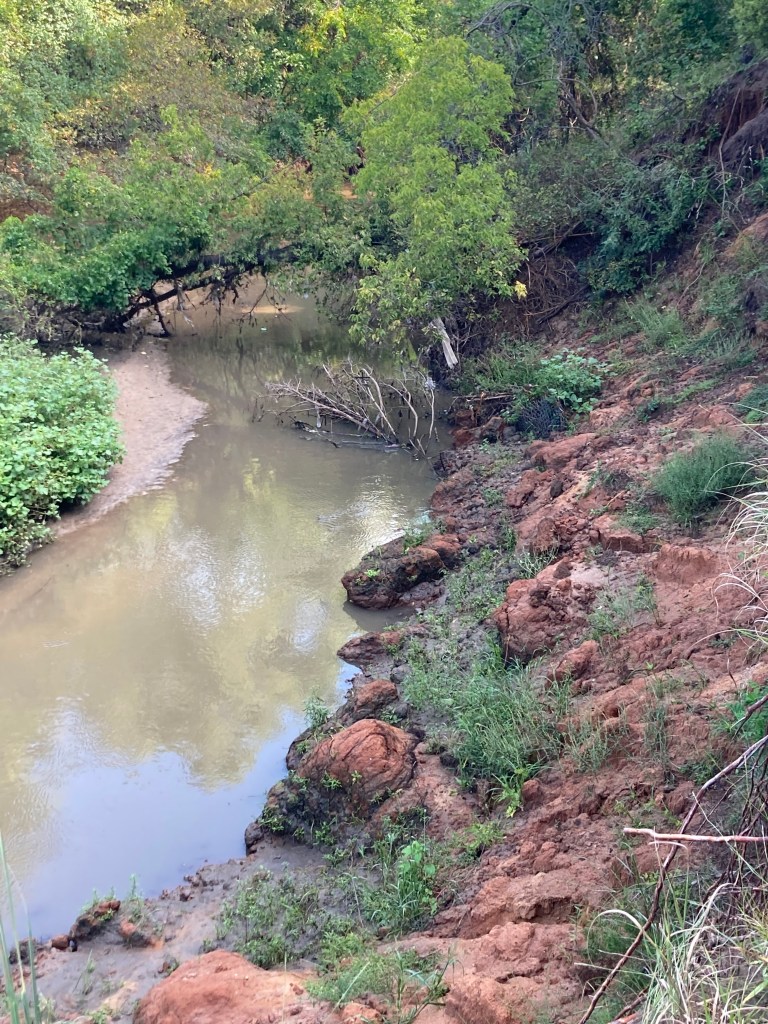
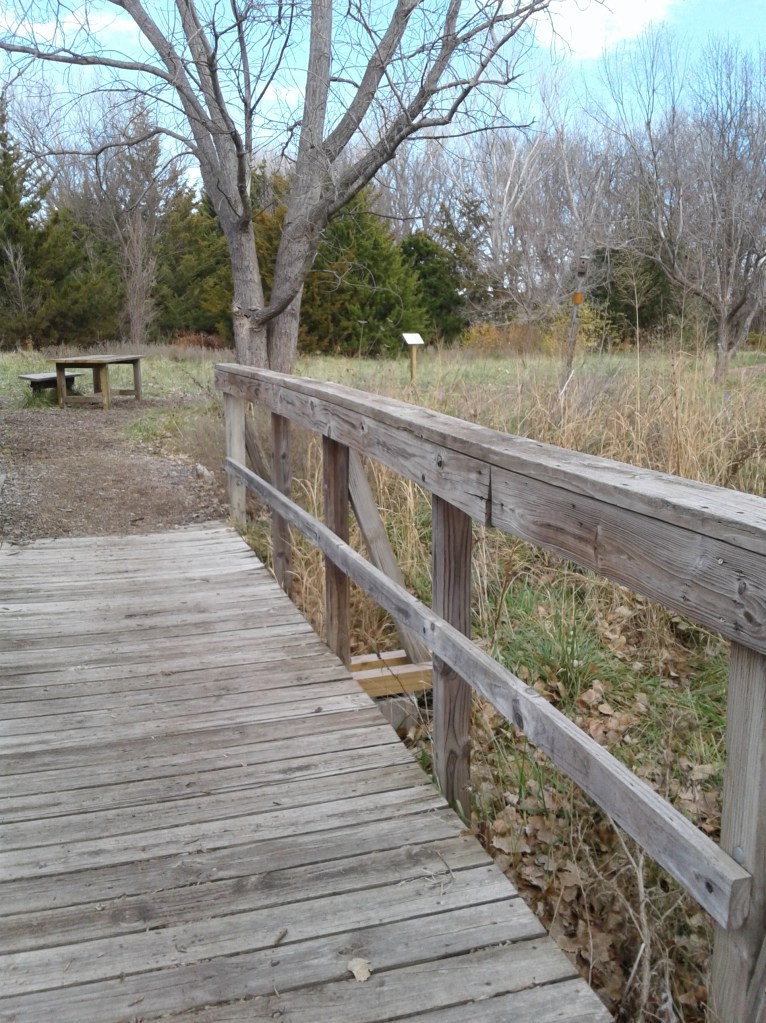
At first glance, the stream appears motionless, its shallow green waters merely reflecting the overarching canopy of green. But here by the bridge, rocks litter the stream’s bed, and its water comes to life. Its meandering impeded, the stream ripples, bubbles, and rushes. The currents ripple and swirl around the rocks and fall over submerged stone, plunging to a lower level, leaving bubbling foam at the base of the mini-waterfall. I sit by the side of the stream listening to its gurgling, allowing the water’s chaos to soothe my soul.
God’s spirit flows through my life like a stream. At times it moves so quietly I scarcely notice its motion. But once life’s difficulties obstruct my way, I take more quiet time to listen carefully for God’s spirit rushing through my life. When I sit quietly, watching and listening, I have eyes to see and ears to hear His spirit moving in my life.
Lord, help me to be inwardly still during both crises and calm times, that I may better acknowledge you and your work in my life.
Psalm 46:10a “Be still and know that I am God.”
Thank you, Father, for providing a way to peace even when life is chaotic and difficult. Thank you for quiet beauty in the world you created. Thank you for nudging me to take some quiet time in your word. Thank you for giving me ways to observe your spirit moving in me.
.”My longings are best met when, in prayer, I simply let my heart beat in time with the Lord’s.”
-Joni Eareckson Tada.
I can relate to this. Sometimes my best prayer time is when I’m walking in nature. It’s a time I can not only talk to God but listen. The steady rhythm of my feet keeps time with my heart as I lose myself in Him. For me, it’s the best way to truly listen to the Holy Spirit speaking to my spirit.
What’s the best way for you to let your “heart beat in time with the Lord’s”?
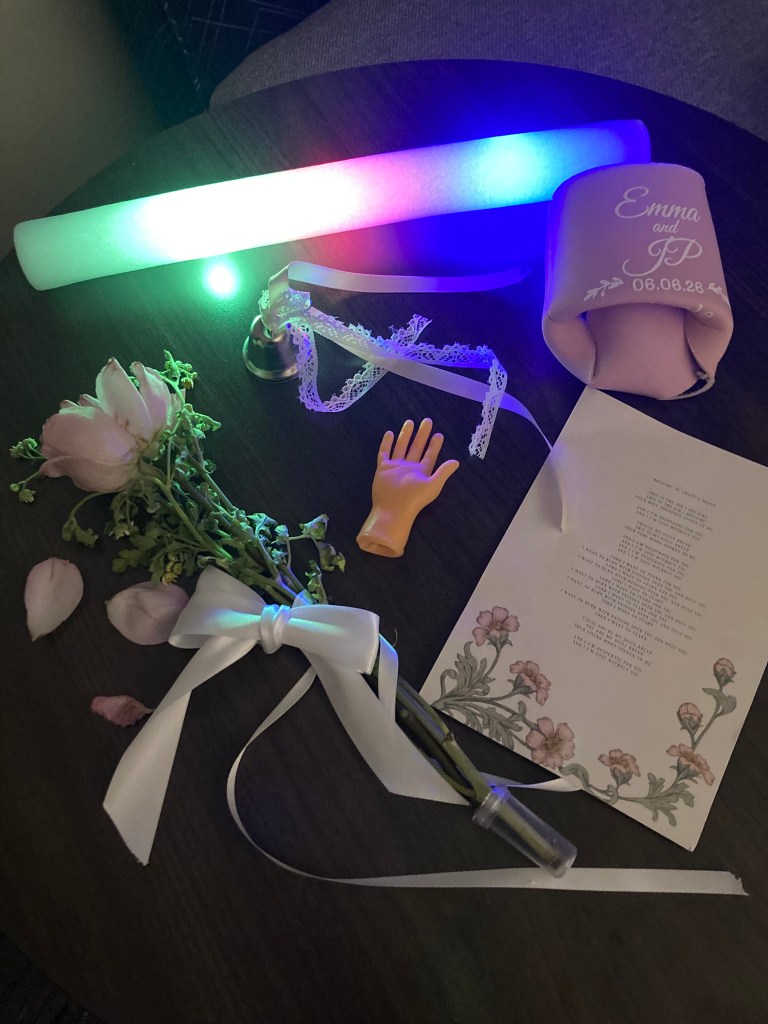
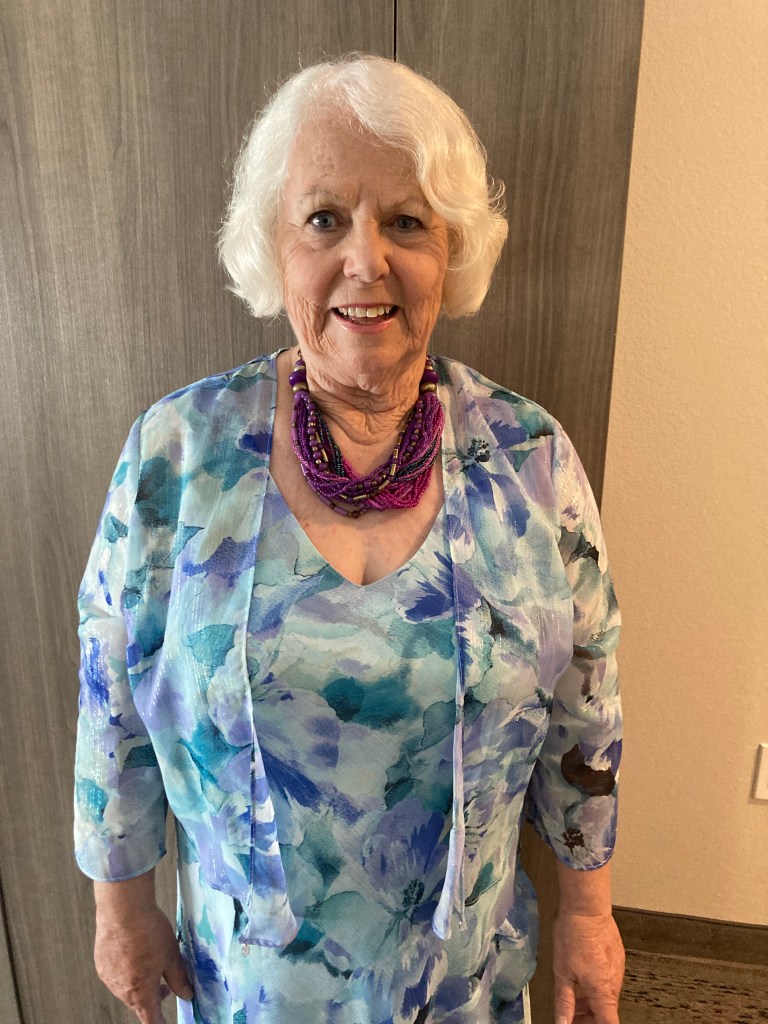
My husband and I are home recuperating after a fabulous weekend celebrating our granddaughter’s wedding and visiting with family. Here are just a few mementos of the celebration. God is so good.
I love those mornings when I wake before the sun and have time to sit in the dark, watching the light gradually increase. The dim light provides a soft glow in the room, making me even more aware of God’s presence.
As I bask in the Lord’s presence, the dark room transforms, slowly turning light gray. More objects are observable. Gradually, the light grows until I can see everything in the room clearly.
When our world seems dark and spinning out of control, perhaps it’s time to sit in a darkened room and wait for the dawn. Wait for the dawning of God’s truth, the dawning of His presence in our souls. Sit quietly. Wait to be aware of His presence.
Just as the light slowly transforms the room, let His presence enter your soul, lighting all the dark places. Allow the darkness of fear, regret, and anger to lighten in His presence. Allow His light to fill your soul with love and grace. Let His presence slowly permeate your soul, lighting its darkness.
Lord, fill me with your love and your light. May it shine for others to see.
“For this is what the Lord has commanded us: ‘I have made you a light for the Gentiles, that you may bring salvation to the ends of the earth.” Acts 13: 47
“This is the day the Lord has made; we will rejoice and be glad in it.” Psalm 118:24
Monday morning is typically a day we all dread, right? It’s back to work and back to the grind.
Yet, I have noticed that whatever my circumstances, my attitude improves when Iam thankful for the good things around me. My perspective changes whenever I thank God for the many good gifts he has given me. Even on a Monday morning.
He has given me so much. I have a home to enjoy. I have friends. I have family. He has given me the air I breathe and a heart that beats. He gives me life. He gives me joy. He gives me a heart filled with gratitude and so much more.
Count your blessings. Consider all He has given you. Then, even on a Monday morning, rejoice and be glad in the new day God has given you.
Thank you, generous heavenly Father, for all your good gifts. Thank you for loving me and giving me grace. Thank you for creating this day and allowing my heart to praise You, even on Mondays.
As I sit in the kitchen, the sound of the sea beckons me. From the beach house, the waters whisper, calling me to the beach. I grab my sunscreen and my towel and walk across the street into the soft, dry sand. I sink ankle deep with each step, the gentle waves whooshing louder the closer I come. In moments I reach the water’s edge. The ocean’s beauty never ceases to amaze me. Blue stretches as far as my eyes can see. Summer’s gentle swells roll on the beach, breaking only a foot from where I stand.
Only when I step into the water do I feel the strength of its pull. Standing ankle deep, my feet sinking into the sand, I let the waves break against my legs. Small as the waves are, I feel their strength as they rush to the shore. I venture a little deeper, and the water breaks against my thighs, splashing up to my waist. I brace myself as larger waves approach, knowing they have the strength to knock me down. After breaking, the waves rush back to their ocean home, pulling against my legs, beckoning me to come deeper, to immerse myself in their crystal clear waters.
I look beyond the small summertime Pacific waves, and see the blue curve of the ocean’s edge, miles out to sea. I marvel at the power of the water, stretching for thousands of miles in every direction. A hundred yard from where I stand, the waves boom and crash against rocks and coral, thundering across the bay. What tremendous power lives in the ocean! It’s so great and so strong my mind cannot fathom it. Nor can I explore its depths. I observe only what washes ashore and what I can see from a few hundred yards out, as far as I feel safe swimming.
Just as the gentle waves washing the shore call to me, God calls His people in a still, small voice. In the quiet times when I listen for His voice, He calls to me, beckoning me closer. When I listen, He speaks clearer, louder.
As I wander at the edges of God’s greatness, experiencing His waves along the shore, I sense the awesome majesty and greatness of Him, stretching farther than my eyes can see, deeper than my mind can conceive. I hear His voice in still, small whispers, washing my soul clean, and I long to plunge in, swimming stroke by stroke nearer to the heart of God.
Father God, thank you for the beckoning whispers of your creation, drawing me ever closer to You.
Job 38:8-11 “Who shut up the sea behind doors when it burst forth from the womb, when I made the clouds its garment and wrapped it in thick darkness, when I fixed limits for it and set its doors and bars in place, when I said, ‘This far you may come and no farther; where is where your proud waves halt’?”
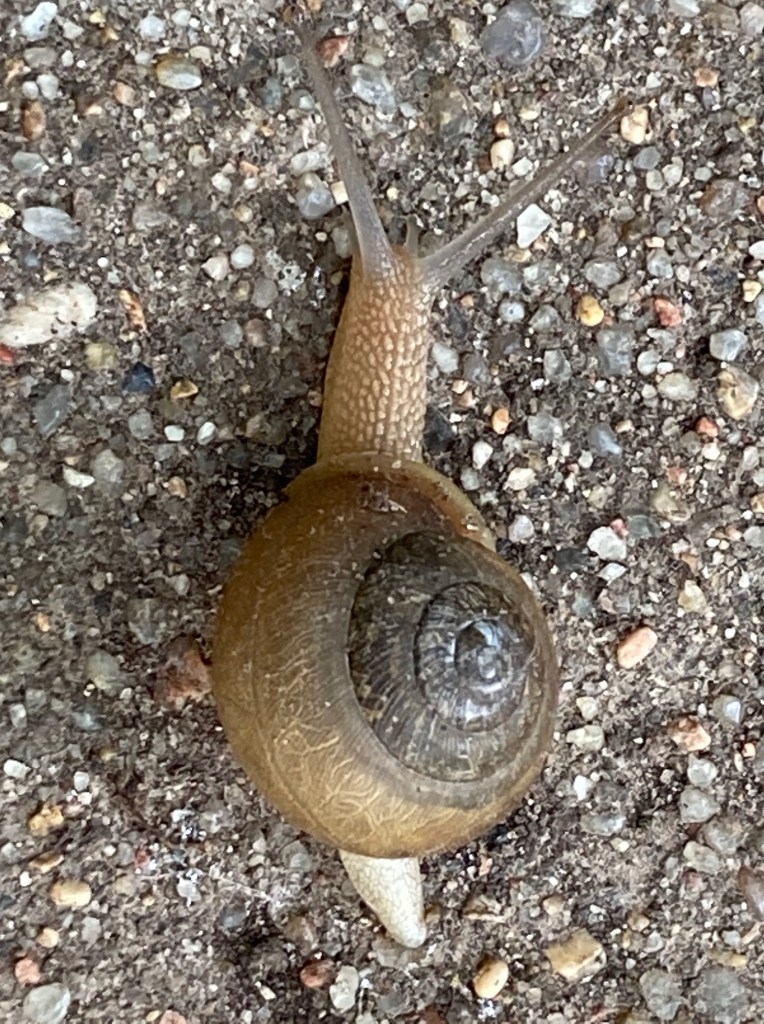
During a recent walk, I noticed a tiny snail, its shell no bigger than a dime. It appeared motionless, but when I knelt down for a zoomed-in photo, I could see its forward progress. Ever so slowly, it traveled, a millimeter at a time, across the sidewalk. Satisfied with my photo, I continued my walk.
As I walked, I couldn’t stop thinking about that miniscule snail making its way across the path. It travelled slowly, but in a direct line, never deviating from its goal, the grass on the other side of the sidewalk. I compared its direct course to my own spiritual walk. Unlike the sluggish snail, I tend to be a sprinter.
I get excited about a new book, new project, or new bible study and run, run, run. Then I get tired, or distracted, and scurry off in another direction. Just like the rabbit in the tortoise and the hare story, I hop one way, rest a while, then scurry in another direction. Two steps forward, one step back.
At times, it seems I’m not making any progress, and I get discouraged. I sigh, and think of myself as a failure, one who can’t stick with anything, who makes no progress, sees no spiritual growth. But the tiny snail made me re-examine my spiritual walk. I evaluated my spiritual progress over the past few years.
Not so long ago, I reacted in anger when I heard or read views different from mine. I would rant about it to my husband. Since then, I’ve made progress. God has enabled me to examine other ideas and consider people’s motives and backgrounds. Yes, I occasionally still get angry. But the anger is short-lived. Two steps forward, one step back. God reminds me that all people are made in His image, and He loves them, too. He died for them, too. He replaces my anger with love for others.
Recent events have triggered fears and doubts. But God reminded me that He is faithful, in all circumstances. Abraham and Sarah had a child, but not until they were elderly. The Israelites were enslaved, yet God miraculously delivered them. Paul suffered immensely, yet God encouraged and inspired him. In spite of, or because of, recent fearful times, my trust in God and His plans has strengthened. Sometimes I still experience fear, but I quickly remember that He is still in control.
No, I don’t move in a slow, steady, straight line like the snail. But I do move. My walk may zig-zag, but I still make progress. Even though I don’t move steadily forward like the little snail, I do make progress. This encourages me.
What about you? Do you make steady spiritual progress like the snail? Or, like me, do you hop about and make your way forward in an erratic path? Do you take two steps forward and one step back? How have you made progress in your spiritual walk?
Father God, whether we make slow, steady progress or erratic progress, guide each of us so that our spirits draw ever closer to you. Teach us to love others as you do.
I love watching skiers fly down slippery slopes, controlling their speed while whizzing down the mountain-side. Unfortunately, the athlete sometimes loses control and careens down the mountain with devastating consequences.
I recently encountered a slippery slope in my neighborhood park. Instead of mountains, my slopes had gentle hills that hug the earth. Warmer temperatures had melted the recent snowfall. When I wandered on the trails, ice lingered in shaded spots, leaving the trails wet and muddy.
One misstep is all it took. Stepping on the gently sloping path, my foot slid. I landed hard on my hands and knees in the mud. With my right wrist and leg hurting, I got to my feet and limped home.
I hurt, but thankfully, I wasn’t injured. As I continued, I thought about spiritual slippery slopes. Some appear mountainous, like substance abuse or infidelity. Others seem tiny, like gossip or criticism. But a fall down these slopes, whether mountainous or tiny, can be deadly.
We venture onto those slippery slopes of sin and fall into the mud. Fortunately, God offers grace. He is willing to lift us and cleanse us. He whispers, “Go, and sin no more” and sets us on level ground.
PRAYER: Father God, guide my footsteps. Keep me away from tempting slippery slopes and keep me standing firmly for you.
“So, if you think you are standing firm, be careful that you do not fall.”
Hey, I’m back! We’ve had computer issues and have spent lots of time at doctor’s offices for my husband’s health problems, but I have returned. Today I want to celebrate by sharing a short devotion I wrote for The Secret Place, many years ago. Have a beautiful week!
@followers
A Bouquet of Roses
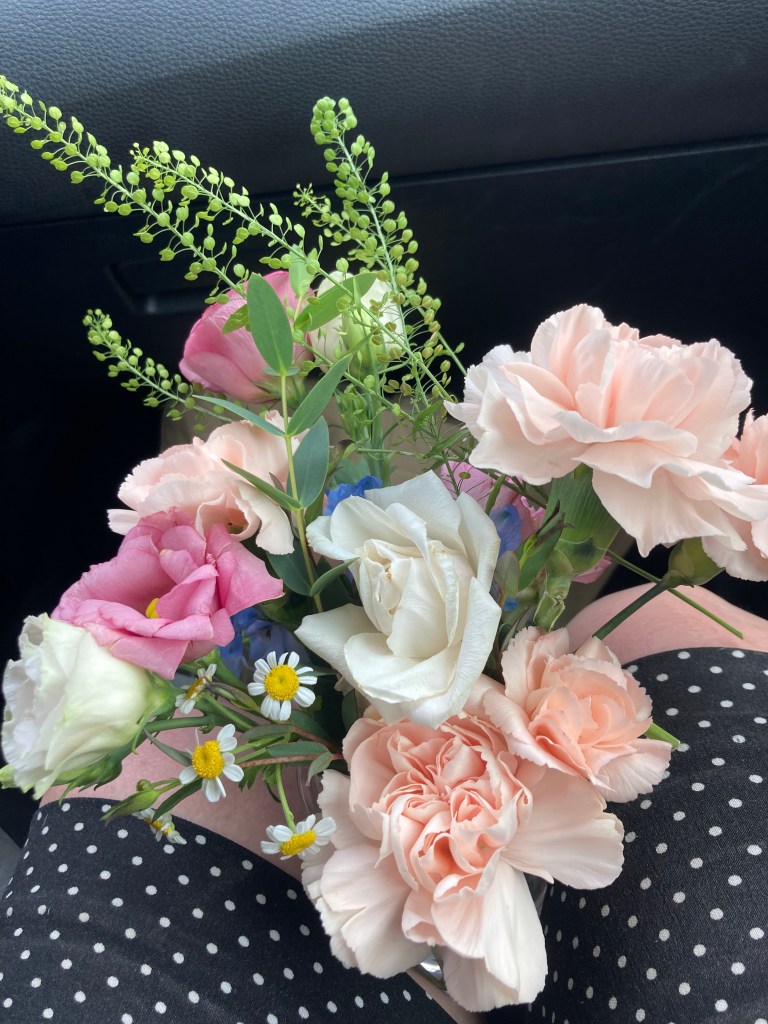
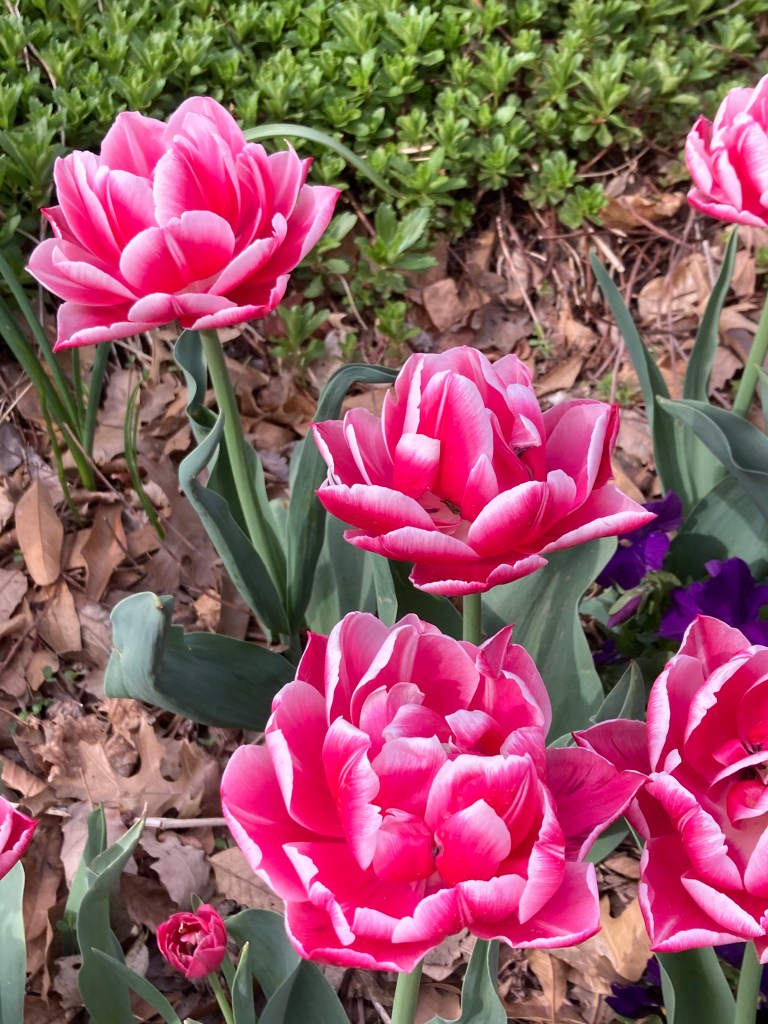
Ladies, do you remember how you felt the first time someone sent you a bouquet of roses? The gentleman who sent them thought very highly of you, and his gift made you feel special didn’t it? You may have laughed or cried, but you expressed joy at the beauty of the roses and the loving gesture of the sender. Gentlemen, do you remember how you felt the first time you sent someone a bouquet of roses? You loved that lady very much and hoped your expression of love would be pleasing to her. You eagerly anticipated her response to your lovely gift. Flowers are gifts to us from their creator, God. He loves us very much, and He hopes we will appreciate his gifts. Just like a suitor who sends his loved ones flowers, God’s gift of fragrant flowers woos us to His side. May we receive his gifts with joy, appreciation, and a desire to love him too. Oh God, lover of my soul, open my eyes to the ways you woo me. Whenever I see a fragrant flower, remind me this precious gift has come from You. Let me respond with joy and gratitude to your countless gifts of love.
Song of Songs 2:12-13 “Flowers appear on the earth; the season of singing has come, the cooing of doves is heard in our land…. Arise, come, my darling; my beautiful one, come with me.”
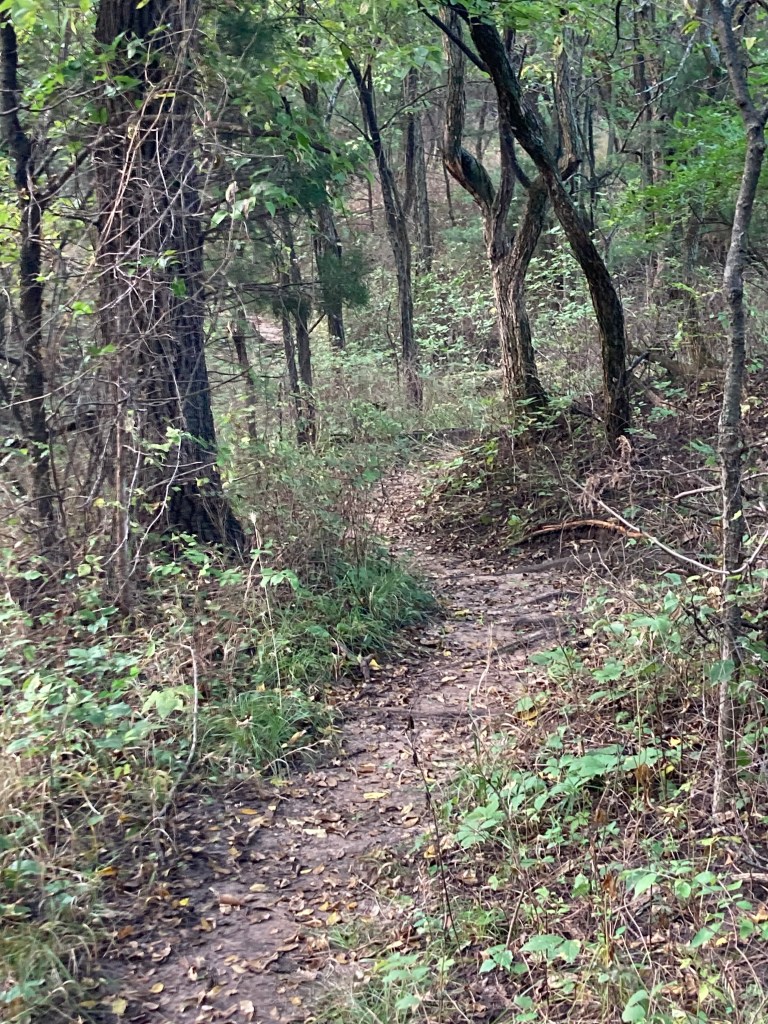
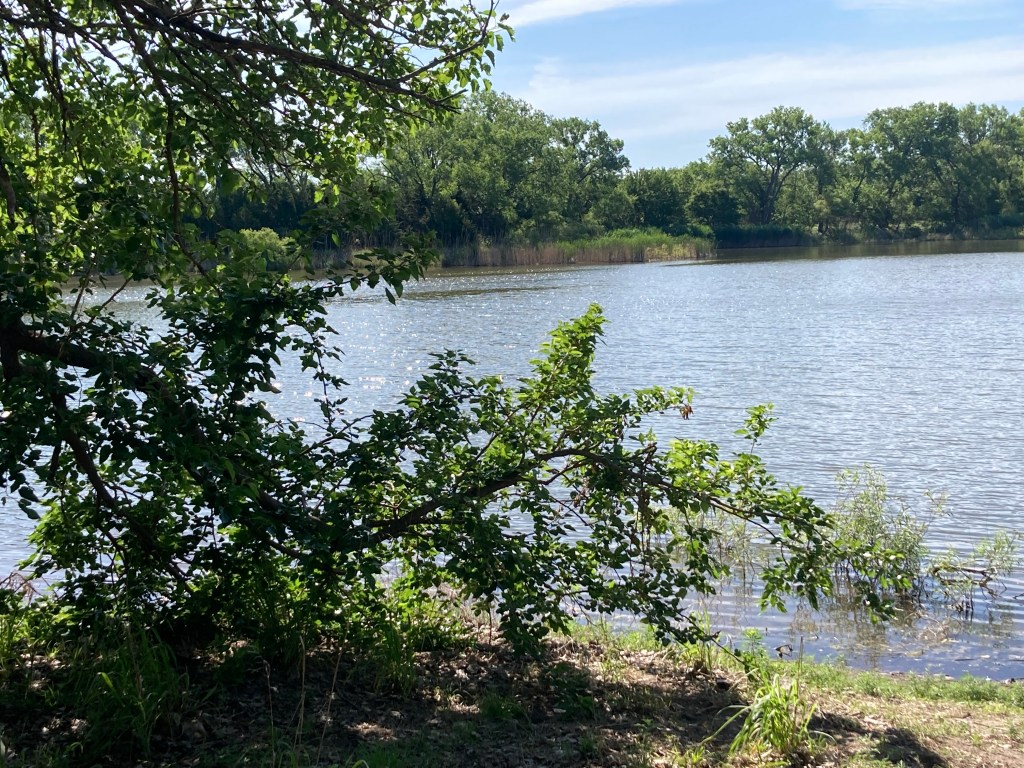
Spring is in the air, and the sunshine draws me to the nearby nature trails. As soon as I enter the park, serenity covers me like a blanket. The trees, still black and bare of leaves, stretch high above my dirt pathway. The winds blowing up over my head sway the trees, causing their bare branches to clack against one another. On either side of my path, green shoots poke tentatively from the ground. Frogs in the nearby pond seem to sing, “Spring is coming.”
Soon these trees will wear lush canopies of green, and flowers will dot the countryside. Suddenly, I encounter a white-tailed deer staring at me. A mere ten yards away, her huge brown yes watch me gingerly pass by. Then I notice two more keeping watch. As my peaceful walk draws to a close, I exit the park through the overarching branches. The city streets loom hard in a barren contrast to the park. Walking home, I vow to take the beauty and serenity of God’s world with me, allowing it to awaken spring in my soul.
Precious Creator, let the springtime around me awaken the springtime in my soul. Let my heart know that you are God.
Jeremiah 24:7a “I will give them a heart to know that I am the LORD.”
(This devotion was first published in “The Secret Place.”)